

Second-hand e-bike: 9 checks before you pay (the battery comes first)
Alberto Martínez Martín, editor of bicis.net 3 min read
In this article
- 1. Battery condition
- 2. The motor
- 3. Mileage and hours of use
- 4. Original charger and keys
- 5. Make sure it hasn't been "tuned"
- 6. Display, controls and wiring
- 7. Frame and components
- 8. Receipt and warranty
- 9. Price versus the cost of a new battery
- What to ask the seller (copy and send it)
- Frequently asked questions
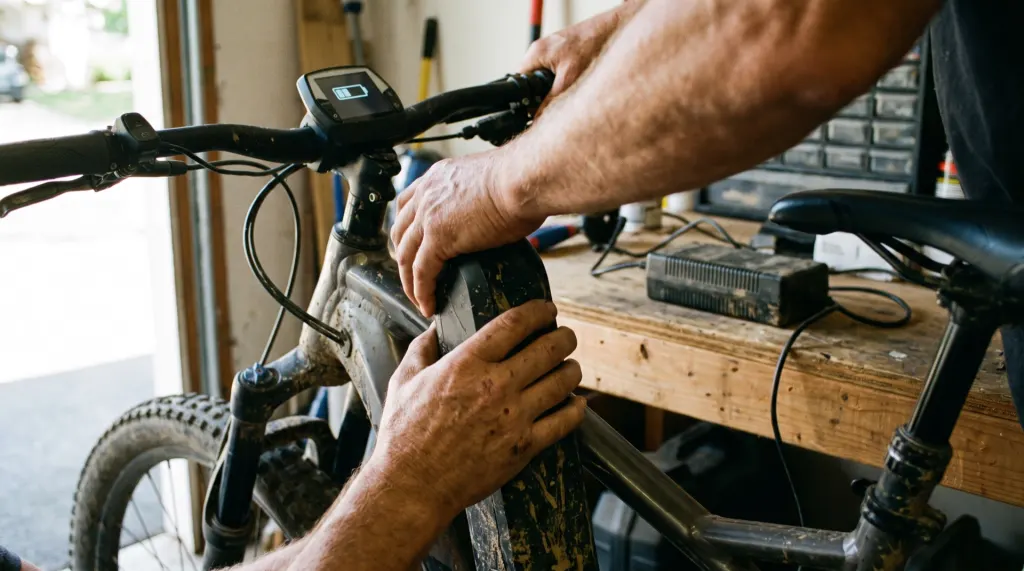
On a second-hand e-bike, the battery is worth almost as much as the bike. A two-year-old e-bike can be a bargain or a trap depending on how its battery has been looked after, and that doesn't show in the photos. The good news: with these nine checks you'll know exactly what you're buying.
1. Battery condition
Lithium-ion batteries lose capacity with charge cycles and over time. As a general guide, many are designed for several hundred full cycles (often between 500 and 1,000) before losing a noticeable chunk of their range. Ask:
- How many kilometres has the bike done, and what real range does it get today?
- How was the battery stored? Extreme heat and leaving it flat for long periods both damage it.
- Is there a diagnostic report?
With many motor systems, an authorised dealer can use its diagnostic software to read the mileage, the motor's hours of use and the battery's health. If the price is high, ask for that report or suggest getting it done together.
2. The motor
Test it on a hill and in every assistance level. Power delivery should be smooth and progressive, with no jerks. Listen: a healthy mid-drive motor hums, but it shouldn't click, knock or make metallic noises.
3. Mileage and hours of use
Almost every display shows total kilometres. A leisure bike with 3,000 km isn't the same as an e-MTB with the same mileage on demanding descents: context matters.
4. Original charger and keys
Check that the bike comes with its original charger and the keys to the battery lock. A replacement charger or set of keys can be expensive or hard to get hold of.
5. Make sure it hasn't been "tuned"
In the European Union, an electrically power-assisted cycle (EPAC) only assists while you pedal, with a maximum continuous rated power of 250 W and up to 25 km/h. If someone has fitted a chip or a kit so it assists at higher speeds, it's no longer legally a bicycle and you can't ride it on public roads as one. It also usually voids the warranty and puts extra strain on the motor. Be wary if the seller boasts that it "goes faster than normal".
6. Display, controls and wiring
Switch the bike on, change modes and check the display shows no errors. Make sure the cables aren't frayed or pinched, especially near the headset and the motor.
7. Frame and components
An e-bike is heavier and brakes harder, so the drivetrain, brakes and tyres wear out sooner. Give it the same check as any used bike: frame, chain, cassette, rotors and pads.
8. Receipt and warranty
Ask for the purchase receipt. Some manufacturers let you transfer the warranty or registration to the new owner, and the receipt will help you at the authorised dealer.
9. Price versus the cost of a new battery
A replacement battery can cost hundreds of euros. If the range is already low, that cost should come off the price. A cheaper e-bike with a battery at the end of its life can end up costing more than a slightly pricier one with a healthy battery.
What to ask the seller (copy and send it)
- How many kilometres has it done, and what real range do you get now?
- Do you have the original charger and the battery keys?
- Has the bike had any speed modifications?
- When was it last serviced at a workshop?
- Do you have the purchase receipt?
Find yours among the second-hand e-bikes on bicis.net, from private sellers and shops all over Spain.
Frequently asked questions
How many years does an e-bike battery last?
It depends mainly on charge cycles and how it's stored. With normal use and good care, it will usually last several years before you notice a clear drop in range.
Can you replace the battery on a second-hand e-bike?
Yes, but it should be an original battery or a certified compatible one for that motor system. It can cost hundreds of euros, so bear that in mind when you negotiate.
Is an e-bike that goes over 25 km/h legal?
If the assistance works above 25 km/h or the motor exceeds 250 W rated power, it's no longer considered a pedal-assisted bicycle and can't be ridden as a bicycle on public roads.
Spotted a mistake? Write to us at info@bicis.net and we’ll fix it. Who writes bicis.net and how we work
El plan del finde, every Thursday
The weather for riding, routes and group rides near you, in your inbox.
When you sign up, tick «I want El plan del finde». One email every Thursday; unsubscribe with one click. Already have an account? Log in
Comments
What do you think? Create your free account to comment.