
Rides already ending in the dark? The lumens your front bike light needs depending on where you ride
Alberto Martínez Martín, editor of bicis.net 3 min read
In this article
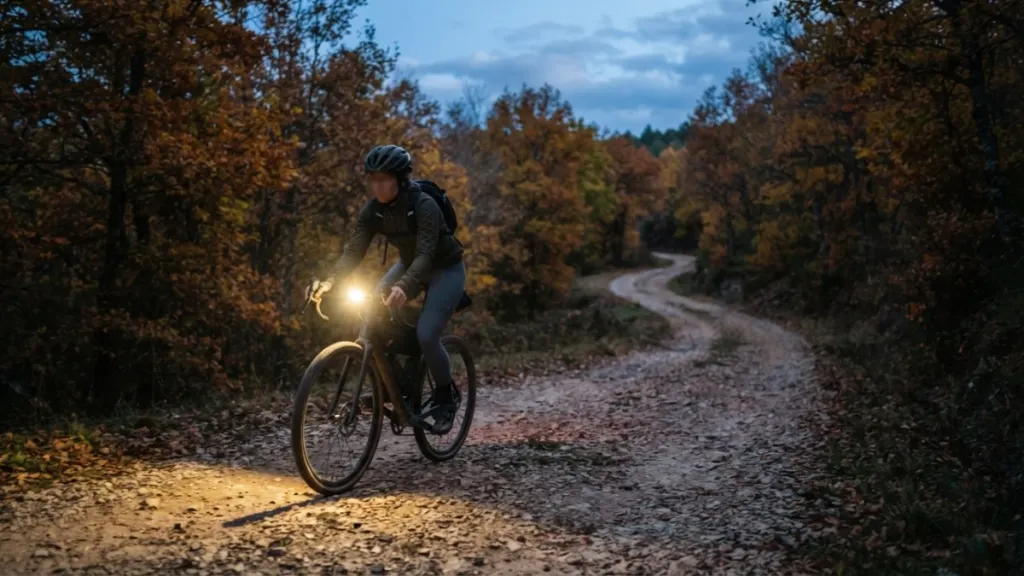
You head out in daylight and come back after the sun has gone down: in autumn it happens on almost any afternoon ride, and that's when the front bike light stops being an accessory and becomes part of your kit. The usual question is how many lumens you really need, and the short answer is that it depends on where you ride and how fast.
That's exactly the topic covered in a recent guide by Todo Mountain Bike, which separates the needs of city, road, gravel and MTB riding. Here's the practical angle so you get your purchase right.
Front bike light: seeing or being seen
Before looking at the number on the box, think about what you need the light to do. These are not the same:
- Being seen: in the city, with street lights and traffic, what matters is that drivers and pedestrians spot you in time. You don't need to light up the way, just to stand out.
- Seeing: outside built-up areas, on a minor road or an unlit track, the light has to clear the way ahead and let you read the tarmac or the terrain in good time.
The further you get from street lighting and the faster you go, the more you'll appreciate extra power.
Road, gravel and MTB: each terrain has its own needs
Road
On a road bike you're going fast and need to see far ahead to anticipate potholes, loose gravel or a bend. Here the shape of the beam matters as much as the power: a cut-off beam that doesn't dazzle oncoming traffic is a matter of respect and of safety.
Gravel
On gravel you mix tarmac and tracks. You'll want a wider beam than on the road to see the edges of the path, and a light with several modes that you can turn down on easy stretches to make the battery last.
MTB
Riding trails at night ups the demands: technical terrain, roots, rocks and tight corners. Many mountain bikers combine a handlebar light with a helmet light, which points wherever you look. If you ride your mountain bike at dusk, it's the combination that gives you the most confidence.
Beyond lumens: what to check before you buy
The lumen figure is the selling point, but it isn't everything. Before you pay, look at this:
- Real run time per mode: maximum mode usually doesn't last long. Work out how long your night ride is and check that the mode you'll use lasts with room to spare.
- Modes and easy switching: being able to change from one to another with gloves on and without letting go of the bars.
- Battery indicator: avoids surprises halfway through your ride.
- Solid mount: if the light wobbles with the vibrations, it lights things up in patches. Even more so on tracks or trails.
- Charging: USB and a reasonable charging time make life easier.
- Water resistance: in autumn and winter, rain is part of the plan.
And don't forget the rear light: being seen from behind is just as important, especially on the road.
A light for every ride
If you ride a bit of everything, a good strategy is to have a powerful light for your rides outside built-up areas and a simpler one for getting around town. That way you don't carry extra weight or use up battery when you don't need to.
If you're short of kit for your autumn rides, take a look at the second-hand accessories on bicis.net, where you can find lights and mounts at a good price. And if you have a light or a bike you no longer use, post your listing for free and give it a second life while you keep riding with your own light.
Sources for this article
- Original story: Todo Mountain Bike · todomountainbike.net
Spotted a mistake? Write to us at info@bicis.net and we’ll fix it. Who writes bicis.net and how we work
Comments
What do you think? Create your free account to comment.