
Cycling in the wind: head out into it, come back with it and ride wheel to wheel safely
Alberto Martínez Martín, editor of bicis.net 5 min read
In this article
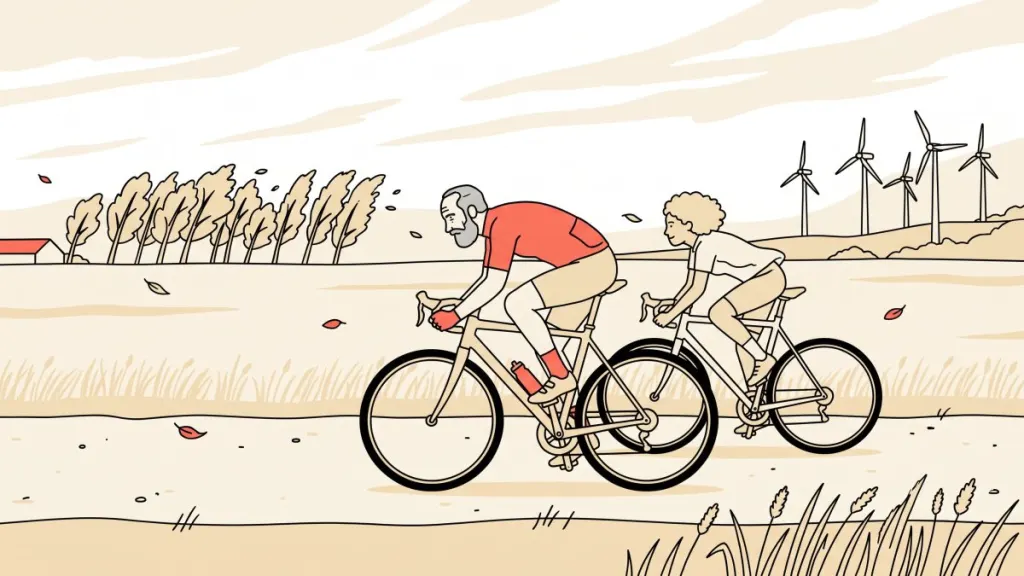
Riding a bike in the wind doesn't have to be a punishment. Read the forecast properly, plan the route the other way round from usual and use a couple of position tricks, and the wind goes from enemy to friend on the way home. This guide shows you how to plan the ride, how to sit on a wheel without scares and when it's better to change plans.
Before you set off: read the forecast like your group would
The wind forecast gives you two figures that matter: average speed and gusts. With a light average wind and mild gusts, you head out without a second thought. What makes the day tricky is the gusts: a strong side blast moves the bike even when the average looks calm.
Check the direction too. The arrow on the map shows where it's blowing to, but the wind's name tells you where it comes from: the cierzo comes down from the north-west along the Ebro valley, the tramontana blows in from the north over the Empordà and Mallorca, the levante pushes from the east in the Strait of Gibraltar and the trade winds blow from the north-east in the Canary Islands.
Before you choose a route, check the riding weather in your area: it gives you wind, gusts, rain and temperature hour by hour, so you can pick the best time of day.
The golden rule: head out into the wind, come back with it
Start the route into the wind, when your legs are fresh, and save the tailwind for the way back, when tiredness kicks in. Do it the other way round and the outward leg is a stroll while the way back feels endless, with the evening chill on top.
On a loop, choose the direction that puts the most exposed stretch into the wind at the start. On an out-and-back, bear in mind that in many inland areas the wind tends to pick up at midday and drop at dusk.
Where to ride when it's blowing hard
Open plains and high roads punish you the most. Look for enclosed valleys, tree-lined roads, forest tracks and greenways set in cuttings or between hedges. A greenway with lots of sheltered sections, like the Vía Verde Ojos Negros in Aragón, lets you ride at a steady pace with no traffic.
Some regions live with the wind almost all year. This table brings together the ones that feel it most with the routes you have on bicis.net to choose where to ride:
| Region | Routes | Average elevation (m) | Greenways | Most noticeable wind |
|---|---|---|---|---|
| Cataluña | 439 | 654 | 2 | Tramontana in the Empordà |
| Aragón | 202 | 658 | 6 | Cierzo in the Ebro valley |
| Andalucía | 43 | 657 | 18 | Levante and poniente in the Strait |
| Islas Baleares | 42 | 396 | 1 | Tramontana in Mallorca and Menorca |
| Castilla y León | 35 | 479 | 10 | Wind on the Meseta |
| Castilla-La Mancha | 32 | 457 | 5 | Wind on the plains |
| Canarias | 30 | 892 | 0 | North-east trade winds |
Data from Ciclismo en cifras as of 11 November 2026 (n = 1,227 routes in Spain and Andorra). Routes traced on OpenStreetMap, © OpenStreetMap contributors.
How to ride into a headwind
With the wind in your face, the key is not to fight it. Shift down a sprocket or two, raise your cadence and forget the speed you'd do on a calm day: measure your effort by feel or heart rate, not by the speedometer.
- Make yourself small: elbows slightly bent, hands on the drops if you ride a road or gravel bike, flatter back and relaxed head.
- Close-fitting clothes: a loose rain jacket acts like a sail. A snug windproof gilet is better.
- Eat and drink before you're hungry: riding into the wind burns more than you think, and the cold masks your thirst.
On a wheel: the best invention for windy days
Riding behind another bike saves you a huge amount of effort. If you go out with your group, take short turns: whoever is in front pulls for a while and then moves aside so the next rider comes through. That way nobody burns out and the group moves along together.
In a crosswind, the good wheel isn't right behind but slightly diagonal, on the opposite side to where the wind is coming from. In a group this forms an echelon. It works well, but on an open road it takes up the lane: only do it with little traffic, on wide roads and if the whole group knows how it works. If you're looking for people to ride like this with, here's how to find your group.
Wheel rules to ride with confidence: don't brake suddenly, point out potholes, don't overlap your front wheel with the rear wheel of the rider in front and leave a bit more space if you don't know the person.
Crosswind: descents, bridges and tunnel exits
Crosswind gives the most scares, especially with gusts. The treacherous spots are always the same: the exit of a tunnel or cutting, a bridge over a valley, a gap between buildings or a lorry overtaking you.
- Hold the bars firmly but without locking your arms: loose elbows soak up the blast.
- On descents, go slower than usual and lean on the leg on the windward side.
- Leave more room towards the edge of the road opposite to where the wind blows from: a gust can push you across.
- Deep-section wheels feel it much more. If you have shallower ones, today's their day.
When to change plans
Some days the sensible thing is not to ride the planned route. If the forecast mentions very strong gusts, a wind warning or a storm, switch to a short, sheltered route, go out at another time or leave the bike at home.
A day on the turbo trainer isn't a day lost: you can do short intervals or spin easy while you watch it rain or blow. If you don't have one yet, see what to check on a second-hand turbo trainer before you buy it.
Frequently asked questions
How much wind is dangerous for cycling?
It depends more on the gusts than on the average. With strong side gusts, descents and bridges become dangerous even when the average wind seems moderate. If there's a wind warning in your area, change plans or choose a very sheltered route.
Is it better to start the route into the wind or with it behind you?
Into the wind. With fresh legs you handle it better, and on the way back, when you're more tired, the wind pushes you home.
What should I wear to ride in the wind?
Close-fitting clothes and a windproof gilet you can stash in your pocket. Wind chills you a lot, especially in autumn and winter, so protect your chest, hands and ears.
How do you ride in an echelon?
Each rider sits diagonally behind the one in front, on the side away from the wind, and turns are taken in a rotating line. It only makes sense in a group, with little traffic and with people who know how it works.
Sources for this article
- Routes and maps: © OpenStreetMap contributors
Spotted a mistake? Write to us at info@bicis.net and we’ll fix it. Who writes bicis.net and how we work
El plan del finde, every Thursday
The weather for riding, routes and group rides near you, in your inbox.
When you sign up, tick «I want El plan del finde». One email every Thursday; unsubscribe with one click. Already have an account? Log in
Comments
What do you think? Create your free account to comment.