
50 mm tyres and short cranks: what the Gravel World Championships can teach you
Alberto Martínez Martín, editor of bicis.net 3 min read
In this article
If you've ever finished a long gravel ride with numb hands, aching knees or a stomach on strike, this one's for you. The 2026 UCI Gravel World Championships were held in Western Australia and it was a very tough edition. One of the riders, Matt Page, has explained which bike, kit and fuelling he chose to take it on, according to road.cc.
His approach comes down to three decisions: 50 mm tyres, short cranks and nutrition already tested before the race. None of them is just for world championship riders. All three fit your weekend gravel bike.
50 mm tyres: wide rubber is gaining ground
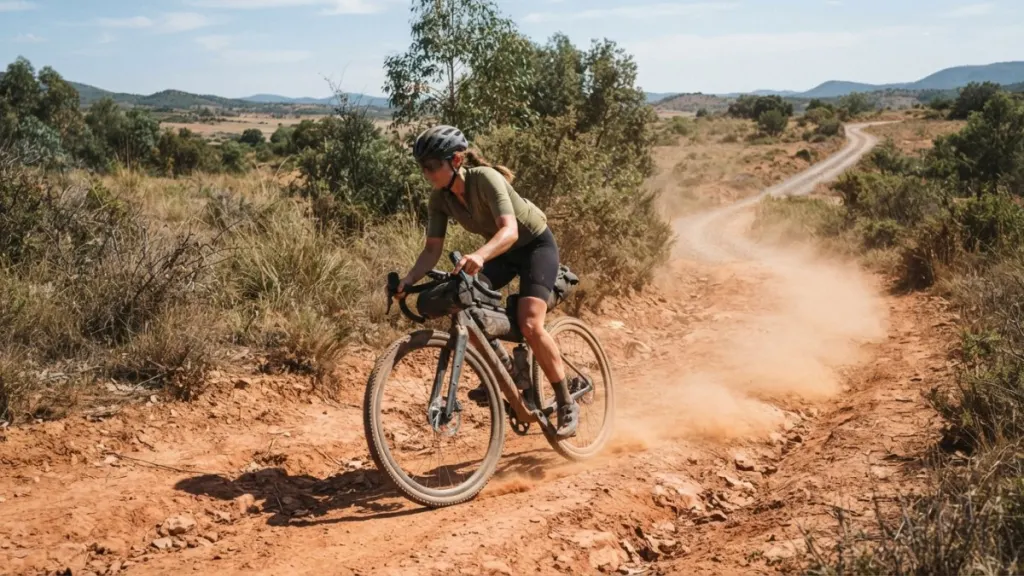
Not so long ago, 40 mm seemed like a lot on a gravel bike. When someone picks 50 mm for a top-level event, it says a lot: on broken ground, comfort and grip are speed too. The less the track shakes you about, the less tired you get and the better you hold your line.
For you, the key question is whether your frame and fork have clearance for that width. Not every gravel bike takes it, and forcing it can make the wheel rub when it's muddy. Before buying tyres, check:
- The maximum width stated by the manufacturer of your frame and fork.
- The internal width of your rims, which affects how the tyre performs.
- Whether you run tubeless, so you can drop the pressure without fear of pinch flats.
- How much clearance is left, especially if you often ride in mud.
If your bike falls short on clearance, it might be time to look at second-hand gravel bikes with more room for wide rubber.
Short cranks: less leverage, more flow
The other eye-catching choice is short cranks. It's a trend you see more and more, both on the road and off it. Shorter cranks open up the hip angle a little at the top of the pedal stroke and make it easier to hold a high cadence. Many riders also notice less strain on their knees on long days.
It's not a change to make blindly. If you change crank length, you should check your saddle height, because bottom dead centre changes. Ideally, try it on medium rides before debuting it at a sportive. If you're curious, in second-hand components you can find cranks to try without paying new prices.
Fuelling at the Gravel World Championships: nothing new on race day
The third key is perhaps the most useful for anyone: the fuelling he used was tested beforehand. It's the golden rule of long events. Race day is not the time to try a gel, drink or bar your stomach doesn't know.
Apply it to your next sportive or long route:
- Rehearse in training what you'll eat and drink, at the same intensity.
- Have a plan for when you eat; don't wait until you're hungry.
- Carry just enough to reach the next feed station or fountain, plus a little extra.
- If it's hot, think about electrolytes too, not just water.
What you can take to the trail
What's interesting about this rundown is that it isn't about impossible parts, but sensible decisions: more comfort to keep going, a position that looks after your body and zero surprises with food. It's the same thing that works for an 80 km route on inland tracks or for your first gravel event.
Check your bike's tyre clearance, write down your fuelling plan and go out and try it this weekend. And if your current gravel bike can't take any more rubber, you can post its listing for free and make the jump to one that can.
Sources for this article
- Original story: road.cc
Spotted a mistake? Write to us at info@bicis.net and we’ll fix it. Who writes bicis.net and how we work
Comments
What do you think? Create your free account to comment.