
How often to replace your bike helmet: its label, impacts and why not to buy one used
Alberto Martínez Martín, editor of bicis.net 6 min read
In this article
Your helmet is the only part of your kit that does its job just once. You wear it every ride, it gets dirty, it takes sun and rain, but its real work lasts an instant: the impact. So the question isn't whether it looks good, but whether it's still ready for that instant. Here's how to tell, how often to replace your bike helmet and why it's the one item we don't recommend buying second-hand.
How to read your helmet's label
Turn your helmet over. Inside, on a sticker or moulded into the foam, is almost everything you need to know.
The standard: EN 1078
In Europe, a helmet for cycling, skating or skateboarding is tested to the EN 1078 standard (in Spain you'll see it as UNE-EN 1078). It sets the minimum it has to meet: how it absorbs an impact, that the strap and buckle hold and that the helmet doesn't come off your head. A helmet is personal protective equipment and carries the CE marking under the European regulation for this equipment. If you can't see the standard or the CE mark, don't use it.
If the helmet is for a small child, it may carry EN 1080, designed so the strap releases if it gets caught. And if you buy a helmet outside Europe, you'll see other standards (such as CPSC in the United States): they're not the same, so check it also carries the European one.
The manufacturing date
The label usually shows the month and year the helmet was made, sometimes on a small clock moulded into the foam. Note it down: that's the date that counts for the replacement period, not the day you bought it.
MIPS and other systems
If you see a yellow MIPS logo or the name of another brand system, your helmet has an inner layer that slides slightly in angled impacts, the most common kind when you come off a bike. It's an extra on top of the standard, not a replacement: a helmet with MIPS still needs its EN 1078. If you want to see how one is rated in a lab, take a look at our review of the Canyon Deflectr MTB helmet.
How often to replace your bike helmet
There are two reasons to replace it, and the first one overrides the second.
After any impact, always
The foam inside (EPS) crushes to absorb the impact and doesn't recover its shape. Sometimes you see a crack; often you see nothing. If you've fallen and your helmet hit the ground, replace it even if it looks intact. The same if it has been dropped from a height or taken a hard knock in the car boot. Many brands have a crash replacement programme with a discount: ask at your shop before buying another.
When the manufacturer's period is up
Even without impacts, a helmet ages: sun, sweat and the heat inside a car in summer take their toll on the foam, the shell and the straps. The exact period is set by the manufacturer of your model in the manual or on its website, and many talk about around 5 years from the manufacturing date (Decathlon, for example, recommends this for its own). If you can't find the manual, ask at the shop where you bought it.
Signs it's time
- Cracks, dents or bits of foam that move.
- The outer shell is coming away from the foam.
- The straps are frayed or the buckle doesn't click firmly.
- The adjustment dial no longer holds and the helmet wobbles.
- It's too big since you cut your hair, or too small with your winter cap.
Why not to buy a used helmet
At bicis.net we love second-hand: it extends the life of bikes and lets you ride for less money. But the helmet is the exception. The seller may be honest and not know the helmet took a knock inside a bag, in the car or in a minor fall. You can't tell from the outside. And you don't know its real manufacturing date, how it was stored or how much sun it has seen.
Given what people ask for an accessory on the site, the saving isn't worth it either: the median price of accessories for sale on bicis.net is €60 (17 listings, data as of 29 October 2026). A new helmet with its EN 1078 is in that same range, and with yours you know everything it has been through.
What you can and can't buy used
| Category | Listings | Median price (€) | Used? |
|---|---|---|---|
| Mountain | 98 | 813 | Yes, checking frame, fork and drivetrain |
| Components | 8 | 275 | Yes, if you can see their wear (wheels, groupsets, power meters) |
| Accessories | 17 | 60 | It depends: lights, bags or racks yes; helmet no |
Data from active «For sale» listings on bicis.net as of 29 October 2026. It's what sellers ask, not the final price. More tables in Ciclismo en cifras.
If you're going to buy a used bike, keep the helmet budget separate and start by knowing what to look for, for example in our guide on what to check on a used gravel bike. And if you're selling your bike, don't throw the helmet in as a gift: better for the buyer to get a new one.
Where to try it on and how to adjust it
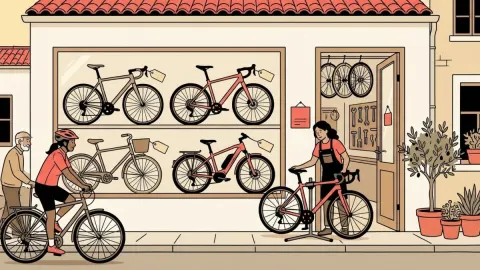
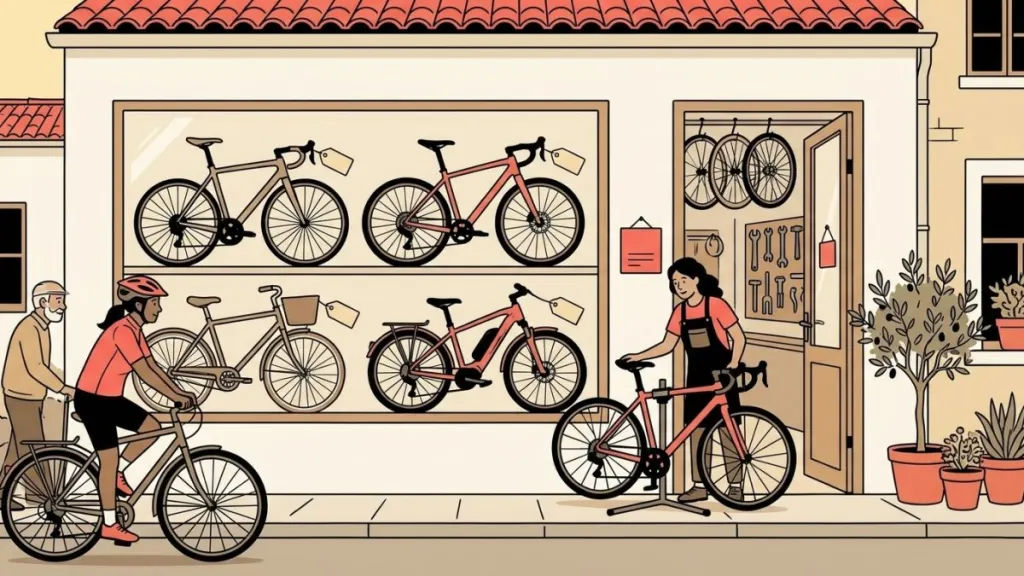
A helmet has to fit you well, and you only know that by trying it on. The bicis.net directory has 1,798 bike shops and workshops in Spain and Andorra (data as of 29 October 2026), like this shop and workshop in Seville. Try it on with the ponytail or cap you wear in winter and check three things:
- Height: the rim two fingers above your eyebrows.
- Straps: the «V» just below your ear and, when fastened, one finger fits under your chin.
- Fit: with the dial tightened, move your head: the helmet doesn't slide backwards.
Since the reform of the General Traffic Regulations approved by the Government in June 2026, an approved helmet is compulsory for cyclists on interurban roads without the previous exceptions. The dates and details are in the DGT's press release.
Frequently asked questions
How often should you replace a bike helmet if it hasn't taken any impacts?
When its manufacturer says so in the manual or on its website, counting from the manufacturing date on the label. Many brands talk about around 5 years. If it looks worn before then, replace it sooner.
Do I have to replace my helmet after a fall even if it doesn't look broken?
Yes. The foam crushes to absorb the impact and doesn't return to its shape, and that damage often can't be seen. Ask the brand about its crash replacement programme.
What standard does a bike helmet need in Spain?
EN 1078 (UNE-EN 1078) with the CE marking. Helmets for small children may carry EN 1080.
Is a helmet with MIPS better?
MIPS adds a layer that helps in angled impacts. It's an extra on top of the standard, not a replacement: the helmet still has to carry its EN 1078 and fit you snugly.
Can I buy a second-hand helmet?
We don't recommend it. You don't know whether it has taken impacts, how it has been stored or its real date. Buy the bike used if you like, and the helmet new.
Sources: DGT, press release on the reform for vulnerable road users (23 June 2026) and Regulation (EU) 2016/425 on personal protective equipment.
Sources for this article
Spotted a mistake? Write to us at info@bicis.net and we’ll fix it. Who writes bicis.net and how we work
El plan del finde, every Thursday
The weather for riding, routes and group rides near you, in your inbox.
When you sign up, tick «I want El plan del finde». One email every Thursday; unsubscribe with one click. Already have an account? Log in
Comments
What do you think? Create your free account to comment.