
Cold-weather cycling clothing: what to wear from 15 °C to 0 °C, layer by layer
Alberto Martínez Martín, editor of bicis.net 4 min read
In this article
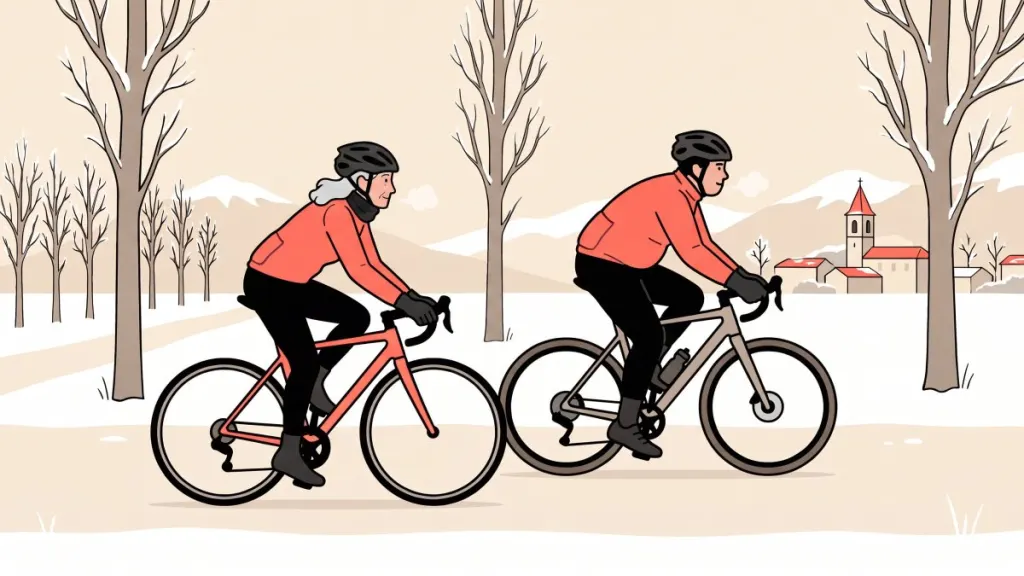
In winter it's not about putting on everything in your wardrobe, but about wearing just enough to stay dry and warm without overheating on the first climb. The golden rule is to dress in layers and set off feeling a little cold: after ten minutes of pedalling your body warms up and what seemed like too little is already enough.
The three layers: what each one does
Cold-weather cycling clothing works as a system. Each layer has a job and, if one fails, the others can't make up for it.
Base layer: keeps you dry, not warm
This is the undershirt, next to your skin. Its job is to move sweat outwards so you don't get cold when you stop or descend a climb. Look for synthetic technical fabrics or merino wool, long-sleeved when it's properly cold. Never cotton: it soaks through and stays cold and wet.
Mid layer: holds the heat
A long-sleeved jersey with a fleecy lining, or a thin thermal jacket. This is the one that changes most with the temperature: you can leave it off on a mild day or double up on a frosty morning.
Outer layer: stops wind and water
A windproof gilet or jacket. On the bike, the wind chills you more than the temperature on the thermometer, especially on descents. If rain is threatening, make it waterproof and breathable; if not, a thin windproof that fits in your pocket is the most useful thing you'll own all winter.
What to wear by temperature
Everyone feels the cold differently, and an easy ride isn't the same as a training session. Take this as a starting point and adjust it to you.
From 15 °C to 10 °C
A thin long-sleeved jersey or a short-sleeved jersey with arm warmers, bib shorts with leg warmers or thin long bib tights, and a gilet in your pocket for the descents. Thin full-finger gloves if you set off early. Arm and leg warmers are the best buy: you take them off when the sun comes up.
From 10 °C to 5 °C
A long-sleeved base layer, a thermal jersey or light winter jacket and fleece-lined long bib tights. Winter gloves, a neck gaiter or buff and overshoes, because your feet are the first thing to get cold. A thin cap under your helmet covers your ears without feeling stuffy.
From 5 °C to 0 °C
All of the above, with a winter jacket with a windproof membrane on top, thick gloves or split-finger mitts, merino wool socks and neoprene overshoes. Cover your neck, ears and forehead. At these temperatures, short routes are best, with places to stop and no long descents in the shade.
Below 0 °C
With ice on the road, clothing matters less than the surface: shady stretches, bridges and descents can be icy even when it's sunny. That day it may be time for the turbo trainer, or to wait until midday.
Hands, feet and head: where you feel the cold
Your body can be warm and you can still have a rough time because of your extremities. For your hands, two pairs (thin ones underneath and windproof ones on top) are better than one very thick pair that won't let you brake or change gear properly. For your feet, wool socks and overshoes; if your shoes are tight with a thick sock, your foot gets colder because the blood doesn't circulate. For your head, a thin cap or headband under the helmet and, when it's very cold, a thin balaclava.
If you're riding an event this winter
Winter isn't empty: there's cyclocross almost every weekend, plus races and MTB rides. The bicis.net calendar has these events by month, with data as of 11 November 2026 (n = 198 published events that haven't finished yet):
| Month | Events | Races | Sportives | MTB |
|---|---|---|---|---|
| November 2026 | 34 | 17 | 7 | 7 |
| December 2026 | 21 | 16 | 2 | 2 |
| January 2027 | 13 | 7 | 0 | 5 |
| February 2027 | 18 | 9 | 3 | 6 |
Source: Ciclismo en cifras by bicis.net. At a winter event there's a lot of standing around at the start: bring a jacket you can take off and hand to someone just before you set off.
Beyond clothing
When it's cold it gets dark early and low light is deceptive: use front and rear lights even if you ride in daylight. Water and mud wear brakes out faster, so check your brake pads before they start squealing. And drink even if you're not thirsty: in the cold you notice it less, but you sweat just the same.
Frequently asked questions
How many layers should I wear to ride in winter?
Usually three: a technical base layer that wicks sweat, a thermal layer and a windproof on top. Above 10 °C you sometimes don't need the thermal; in a frost, beef up the mid layer and your extremities.
Why do I freeze on the descents?
Because the wind on the descent strips away your heat and, if you're sweaty, wet clothing makes it worse. Put your windproof on before you start descending and close the neck properly.
What can I do so my feet don't get cold?
Merino wool socks, overshoes and shoes that aren't tight with a thick sock. If your foot is squeezed, less blood circulates and it gets cold sooner.
How do I know if I'm wearing too much?
If you set off and feel comfortable from the first minute, you're wearing too much: you'll sweat on the first climb and then get cold. Set off feeling a little chilly and let your body warm up as you pedal.
Spotted a mistake? Write to us at info@bicis.net and we’ll fix it. Who writes bicis.net and how we work
El plan del finde, every Thursday
The weather for riding, routes and group rides near you, in your inbox.
When you sign up, tick «I want El plan del finde». One email every Thursday; unsubscribe with one click. Already have an account? Log in
Comments
What do you think? Create your free account to comment.